Choosing a wedding planner is less about hiring a vendor and more about finding a true partner for one of the biggest journeys you'll take. Before you dive into Instagram feeds or schedule consultations, the most crucial work happens between the two of you. You must align on your style, your budget, and your guest list.
Completing this foundational work first is non-negotiable. It transforms a vague, overwhelming search into a focused, intentional mission to find the perfect professional for your specific celebration. This is how you set yourself up for success.
Define Your Vision Before You Search
You cannot find the right guide if you don’t know your destination. This is why the absolute first step is to get crystal clear on your vision. Knowing how to choose a wedding planner in a world-class destination like Puerto Vallarta or Punta Mita begins with a shared picture of what your wedding day should feel like. This extends far beyond colors and flowers; it's about the atmosphere, the guest experience, and the memories you want to create.
When you do this prep work, you arm yourself with the language and criteria to spot a planner who not only has a beautiful portfolio but who truly understands your unique perspective.
Establish Your Wedding Vibe and Priorities
It's time for a real, honest conversation. Sit down together and dream a little. Are you picturing an intimate, toes-in-the-sand ceremony for 50 of your closest loved ones, followed by a candlelit dinner? Or is your dream a vibrant, multi-day fiesta for 200 guests at a five-star Riviera Nayarit resort with a show-stopping band?
There are no wrong answers, but you must be on the same page. What are the top three elements that matter most? Is it world-class food and inventive cocktails? Is it ensuring the dance floor is packed all night? Or are stunning, over-the-top floral designs your number one priority? This clarity is your greatest asset.
Your "vibe" is your north star. It's the feeling your guests will remember long after the last song plays. A planner who specializes in chic, minimalist elopements might not be the best fit for a grand, traditional hacienda wedding.
A powerful way to bring this to life is by creating a shared Pinterest board. But don't just pin pretty pictures of centerpieces. Pin images that capture a feeling—a candid shot of a laughing crowd, a quiet moment between a couple, a joyful dance floor. This visual guide will be an invaluable tool for showing potential planners exactly what you’re imagining.
Set a Realistic and Honest Budget
Let's discuss finances. This conversation can be challenging, but it is the most important one you will have. Your budget dictates everything, from your venue to your planner. Without a clear number, you’re not really searching—you’re just window shopping. This is where inspiration meets financial reality.
I see it constantly; it's a huge pain point for couples. While the average wedding in 2025 can run between $33,000 and $36,000, a staggering 71% of couples report feeling overwhelmed by the financial side of things. A great planner's job is to bridge the gap between your Pinterest board and your bank account, especially since 48% of couples cite this as their single biggest challenge.
That’s why finding a planner who is upfront and transparent about costs is so critical. You can learn more about how financial transparency impacts the planning experience on Wedfluencer.com.
Key Takeaway: Building Your Initial Budget
- Identify Contributors: Clearly define who is helping pay for the wedding and their exact contributions.
- Determine Your Max Spend: Agree on a total number that you are both comfortable with and that you will not exceed.
- Allocate to Priorities: Use your "vibe" conversation to assign percentages to your top three must-haves (e.g., 40% for Venue/Catering, 15% for Photography, 10% for Entertainment).
Draft Your Preliminary Guest List
Your guest count has a direct and significant impact on your budget and venue options. A wedding for 75 people is a completely different event—logistically and financially—than one for 175. Making this decision early is a game-changer.
Sit down and create a tiered list together.
- The A-List: These are your non-negotiables—immediate family and your absolute closest friends.
- The B-List: This includes extended family, more friends, and important colleagues.
- The C-List (or "Wish List"): These are the people you'd love to invite if space and budget permit.
This simple exercise is an eye-opener. It shows you how quickly the numbers add up and helps you make practical decisions if your list starts to clash with your budget. Having a realistic range (e.g., "we're aiming for 100-120 guests") provides a potential planner with the concrete information they need to start building a real, accurate proposal for you.
Building Your Shortlist: How to Find the Right Planners
You’ve got your vision and you know your numbers. Now for the exciting part: finding the professional who will bring it all to life. It's time to build your shortlist of potential wedding planners, and this goes way beyond a simple Google search. We are looking for a true partner, someone whose work and personality align with yours.
The wedding industry is set to be a $106 billion market by 2025, meaning planners are more specialized than ever. With 85% of couples using digital tools to plan, you need someone who is not just creative, but also digitally fluent. A planner’s online presence is your first glimpse into their professionalism and style. You can get a deeper look into the evolving wedding market statistics on amraandelma.com.
Start With the Insiders
Before you dive into the endless scroll of social media, start with the people who already know the local landscape. Your venue is your first and best resource. Ask for their preferred vendor list. This isn't just a random collection of names; it's a curated list of planners they trust—the pros who know the venue’s quirks, have relationships with the staff, and understand the logistics of the space. Tapping into this list can save you a world of headaches.
Next, talk to other key vendors you might have already booked, like your photographer. Ask them directly: "Who do you love working with?" The Puerto Vallarta wedding community is tight-knit. They know who stays cool under pressure and who is a collaborative team player.
Use Instagram and Blogs the Smart Way
Visuals are everything when planning a destination wedding, but you must be strategic. Don’t just get lost in pretty pictures. Search with intention, not just for inspiration.
- Search by Location: Instead of broad hashtags, use Instagram’s geotag feature. Look up your venue or top-tier resorts in Punta Mita and Riviera Nayarit. See which planners are consistently tagged in real wedding photos, not just styled shoots.
- Study Wedding Blogs: High-end wedding blogs featuring real Puerto Vallarta weddings are a treasure trove. These features almost always credit the full vendor team, giving you a complete picture of a planner's work.
- Follow the Creative Trail: Found a photographer whose work you’re obsessed with? Go through their portfolio and see which planners they work with again and again. Top-tier professionals collaborate consistently.
How to Read a Portfolio Like a Pro
Any planner can have a beautiful website. You must dig deeper to see if they have the substance to back up the style. You aren't just hiring a decorator; you’re hiring a project manager, a creative problem-solver, and your advocate.
As you look through a portfolio, ask yourself one simple question: "Can I see us in their work?" You’re looking for versatility. If every wedding looks identical, they might be more committed to their brand than they are to yours.
Key Takeaway: Portfolio Analysis Checklist
- Range of Clients: Look for proof they’ve worked with diverse couples (e.g., LGBTQ+ weddings, multicultural events). This shows flexibility and an inclusive mindset.
- Logistical Skill: Are there examples of challenging setups, like beachside tented receptions or events with large guest counts? This is proof they can handle complexity.
- Reviews Match the Photos: Go read their testimonials. Do past clients rave about their calm demeanor and problem-solving skills, or just the beautiful flowers? The best planners master the unseen work that makes beautiful moments happen.
Mastering the Wedding Planner Interview
You've done the research and narrowed down your list. Now for the most important part of the entire search: the interviews. This is so much more than a simple Q&A. It's a chemistry check. You're looking for someone who doesn't just get the logistics, but who actually gets you and your vision for your wedding day.
This is your chance to look past the picture-perfect portfolio and get to know the real person you'll be trusting. It’s where you’ll figure out if their communication style, creative instincts, and general vibe are a match for yours.
This quick visual guide shows how you should be filtering candidates before you even get to this interview stage.
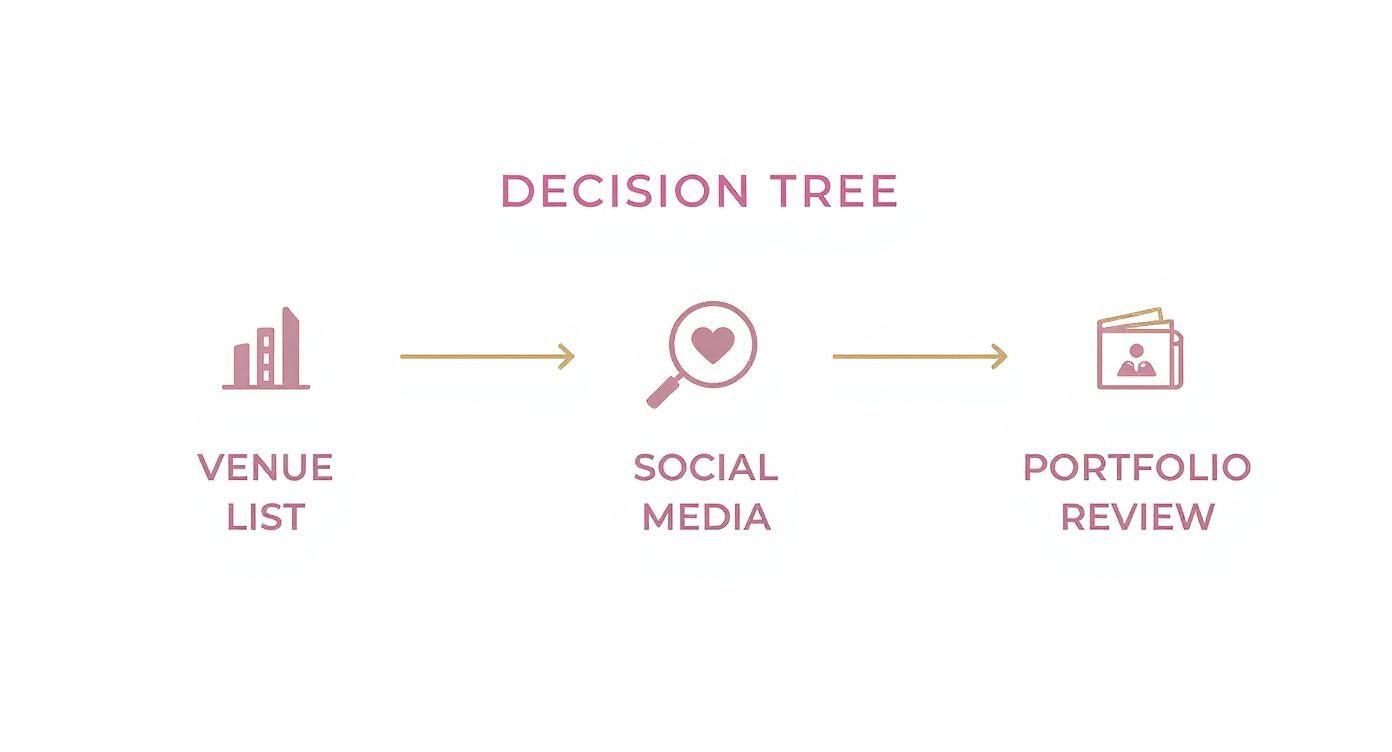
The takeaway here is that if you vet planners properly from the start, you'll only be sitting down with candidates who are already a great potential fit.
Beyond the Basic Questions
Anyone can ask, "How much do you charge?" To really know if a planner is your person, you have to dig deeper. You need to ask questions that reveal their process, their real-world experience, and their personality. Your goal is to understand what it’s truly like to work with them.
Think of this as a conversation, not an interrogation. How well you connect and communicate is just as telling as their answers. This is the very first test of what will be a very close working relationship.
Come prepared with a list of questions that matter to you. It shows you're serious and organized, and ensures you don't forget anything important.
Key Takeaway: Powerful Interview Questions
- On Experience with Your Vision: "We're picturing a multi-day celebration for 150 people at a private villa in Punta Mita. Can you walk us through a similar wedding you've planned from start to finish?"
- On Vendor Relationships: "Based on our style, which photographers or florists in the Puerto Vallarta area come to mind? What makes your relationships with your go-to vendors so solid?"
- On Problem-Solving: "Tell me about a time something went wrong on a wedding day—a vendor was a no-show or a tropical storm rolled in. How did you fix it?"
Essential Questions to Ask a Wedding Planner
| Category | Question to Ask |
|---|---|
| Experience & Style | Can you describe the most challenging wedding you've ever planned? What did you learn? |
| Communication | How often will we communicate, and what's your preferred method (email, phone, text)? |
| Budget Management | How do you help couples create and stick to a budget? Can you provide an example? |
| Vendor Network | Do you receive commissions from vendors you recommend? How do you choose who to work with? |
| Problem-Solving | What is your backup plan for common issues like bad weather or a vendor cancellation? |
| The Day Of | Will you be on-site on our wedding day? Do you bring an assistant or a team with you? |
| The Fine Print | Can you walk us through your contract and payment schedule? What are your cancellation policies? |
These questions aren't just about getting information; they're about seeing how a planner thinks on their feet and whether their answers give you a feeling of confidence.
Assessing Communication and Crisis Management
A planner's ability to communicate with clarity and stay cool under pressure is absolutely non-negotiable. During the interview, notice how they listen. A great planner makes you feel heard. They should also be asking you plenty of questions, showing a genuine curiosity about your story.
It's also a good time to ask about the tools they use. A planner's comfort with technology can make a huge difference in keeping everything organized. With inflation impacting the budgets of 85% of couples, a tech-savvy planner who can streamline the process is more valuable than ever. For more insights, you can read about the challenges modern planners are facing on WPIC.ca.
How to Spot the Red Flags
Sometimes, it's what a planner doesn't say that speaks volumes. Always trust your gut. If a conversation leaves you feeling uneasy or confused, pay attention to that feeling. This is a long-term partnership, and you deserve to feel 100% confident.
Keep an eye out for these potential warning signs:
- They dismiss your budget or ideas: A professional works with your vision and financial reality, offering creative solutions, not judgment.
- They talk more than they listen: If it feels like a sales pitch, they might care more about their brand than your wedding.
- They're vague about their process: A seasoned planner can easily explain their planning timeline, communication methods, and payment structure.
- They bad-mouth other vendors: True professionals don't tear others down. It is a sign of a difficult personality.
Ultimately, when you choose a wedding planner, you are choosing the person who will set the tone for your entire engagement. You should walk away from the interview feeling excited, understood, and confident.
How to Make Sense of Proposals and Contracts
The proposals are in. It's exciting, but it can also be overwhelming. You have several documents in front of you, all with different price points and layouts. Now is the time to dig in and understand what you’re getting for your investment. This is the moment that separates a good choice from a great one.
We're moving past gut feelings and getting into the black-and-white details. Think of yourself as the project manager of your wedding. It’s time to meticulously compare what each planner is truly bringing to the table.
Looking Beyond the Price Tag
It’s tempting to only look at the bottom line, but that is rarely the whole story. A lower price often means fewer services. The goal is to compare apples to apples.
I always recommend my clients create a simple spreadsheet. List each planner in a row, then create columns for key service areas. This forces you to get granular and see exactly how they stack up.
Key Takeaway: Proposal Comparison Points
- Scope of Services: Does one planner include full event design, while another calls it an add-on? Know exactly what "full-service planning" means to each person.
- The Team: Will there be assistants on the day of your wedding? For any wedding with over 100 guests, I consider at least one assistant non-negotiable.
- Hidden Fees: Keep an eye out for mentions of travel costs, administrative fees, or charges for extra meetings. A transparent proposal lays everything out on the table.
The best proposal isn't the cheapest one. It's the one that clearly details the most comprehensive support for your specific needs, ensuring there are no costly surprises later.
Once you have this visual comparison, you'll see the real value. You might realize that a planner who costs more is actually saving you money and stress by including things others would charge for later.
Scrutinizing the Wedding Planner Contract
Once you’ve dissected the proposals and you're leaning toward "the one," it's contract time. This legal document is your safety net. Do not rush it. And never feel awkward asking for clarifications. A true professional will welcome your attention to detail.
A solid contract must be specific, leaving no room for interpretation. It’s written to protect both of you by setting crystal-clear expectations from the start. If a planner is cagey about providing a detailed contract, that is a massive red flag.
Your Contract Must-Haves Checklist
Before you sign, check for these essentials. This is your final confirmation that you're covered.
- A Complete List of Services: The contract must spell out every single service included in your package, line by line.
- Clear Payment Schedule: It needs to outline the total fee, the non-refundable retainer, and the exact dates and amounts for every future payment.
- Cancellation and Postponement Policies: What happens if you have to cancel? What if they have an emergency? The terms for both scenarios must be spelled out.
- Liability and Insurance: The contract should confirm that the planner carries professional liability insurance. This protects you.
- Communication Plan: The contract should set expectations for business hours, preferred contact methods, and a guaranteed response time.
- Responsibilities Clause: This part defines who does what, clearly stating the planner’s duties versus your responsibilities.
Taking the time to review these documents with a fine-tooth comb is what allows you to make a choice with total confidence. This is how you find an advocate who will truly have your back.
Making the Final Decision with Confidence
You’ve done the hard work. You’ve reviewed proposals, dissected contracts, and had crucial interviews. Now, you’re looking at a shortlist of amazing planners, and the checklists can finally take a back seat. This is where your intuition comes into play.
The final piece of the puzzle isn't about spreadsheets; it's about making a choice that feels right, deep down.

Remember, you're not just hiring a vendor. You're choosing a partner and a guide for one of the most significant journeys you'll take. It’s time to trust your gut and move forward.
Trust Your Instincts
After all the logical analysis, pause. Take a breath and think about how each planner actually made you feel. It’s a surprisingly powerful indicator of who you'll work best with.
Ask yourselves these final gut-check questions:
- Who did you just click with? Who would you feel most comfortable calling during a moment of stress?
- Who really listened? Did you feel they were genuinely hearing your vision, or just fitting you into a standard package?
- Who got you the most excited? A great planner doesn't just manage stress; they amplify the joy and anticipation.
Your wedding planner will be a major part of your life for months. Liking them isn't a bonus—it's essential for a planning experience that’s collaborative and fun, not a chore.
This isn’t about finding a new best friend, but it is about finding a professional whose vibe matches yours. That gut feeling? It’s your subconscious picking up on all the little things that logic can’t quantify.
The Crucial Final Step: Checking References
Before you sign on the dotted line, there's one last piece of due diligence. References. Any planner worth their salt will be eager to connect you with recent couples. This is your chance to get the real story from people who were in your exact shoes.
When you chat with them, dig deeper than a simple, "Were they good?"
Key Takeaway: Smart Reference Questions
- "What was the single most helpful thing they did for you during the entire process?"
- "Can you tell me about a time they handled an unexpected problem on the wedding day?"
- "How was their communication in those final, hectic weeks?"
- "Looking back, is there anything at all you wish they had done differently?"
Their answers will paint a vivid picture of the planner's real-world working style. It's the final confirmation you need to feel 100% confident in your choice.
Moving Forward Gracefully
You've made your decision! Now it’s time to make it official and handle the next steps with class.
Accepting the Proposal
Send your chosen planner an enthusiastic email or call them. Let them know how excited you are to begin and ask for the final contract. Confirm the next steps for the retainer payment to officially lock in your date.
Declining the Others
It’s just as important to politely let the other planners know you've made a decision. A short, courteous email is all it takes. Thank them for their time and effort. You don't owe a long explanation; "We've decided to move in another direction, but we truly appreciate you sharing your expertise with us," is perfect.
This respectful close ensures you begin your planning journey feeling organized, positive, and ready to go.
Your Lingering Questions, Answered
You've absorbed a lot of information. It's normal to still have a few questions as you prepare to make this huge decision. Let's tackle some of the most common things couples ask right before they hire their planner. Think of this as your final gut check to clear up any lingering doubts.
Do We Really Need a Full-Service Planner?
This is a personal question. The answer comes down to your timeline, personality, and how much you actually want to be involved in the details. If you're busy, planning from a distance, or the thought of juggling dozens of vendor emails is stressful, then yes—a full-service planner will be your saving grace.
But if you love the creative process and have already locked in key vendors, a month-of or "day-of" coordinator might be a better fit. Be honest with yourself about the support you need to enjoy your engagement.
Key Takeaway: Types of Wedding Planners
- Full-Service Planning: For the couple who wants an expert guide from the very first step to the very last.
- Partial Planning: For the couple who has made some big decisions but needs help getting across the finish line.
- Day-of Coordination: A non-negotiable for almost everyone. This person takes over all logistics in the final weeks so you can be fully present on your wedding day.
When’s the Right Time to Bring a Planner On Board?
If possible, hire your planner first. Before you book a venue.
Why? A seasoned local planner knows which venues look stunning but have terrible sound restrictions, or which caterer is perfect for your specific vibe. They can prevent you from making a costly mistake by falling in love with a venue that doesn't actually fit your guest count or budget. Getting a planner involved from day one lets them build a cohesive vision and assemble a dream team of vendors they trust.
How Do Planners Actually Charge for Their Services?
Understanding how a planner gets paid is essential for your budget. You'll typically see one of three models.
A planner’s fee structure says a lot about their business. You're looking for total transparency—a clear model that feels fair and doesn't leave you worrying about hidden costs.
Here’s what to expect:
- Flat Fee: A set price for a defined scope of work. This is the most straightforward and predictable option.
- Percentage of Budget: Common for large, complex weddings, the fee is usually 15-20% of your total wedding expenses.
- Hourly Rate: Less common for full-scale planning but might be used for specific consultations.
Pro tip: Ask directly if they accept commissions from vendors. An ethical planner works for you. Any trade discounts should be passed directly to you. Their recommendations should be based purely on who is best for your day.
What's the Real Difference Between a Venue Coordinator and My Wedding Planner?
This is a critical distinction. They are two completely different—and equally important—roles.
A venue coordinator works for the venue. Their loyalty is to the property. They ensure the venue's rules are followed and its services are delivered.
Your wedding planner works for you. They are your advocate, creative director, and budget manager. They help you hire all your vendors, create the master timeline, manage the wedding party, and solve problems from your perspective. You need both.
Ready to connect with a professional who can bring your dream day to life? The incredible vendors at Vallarta Wedding Planners are a curated collection of the best in the business, handpicked for their expertise and deep local knowledge of Puerto Vallarta, Riviera Nayarit, and Punta Mita. Explore our network to find your perfect match at https://www.vallartaweddingplanners.com.
Article created using Outrank